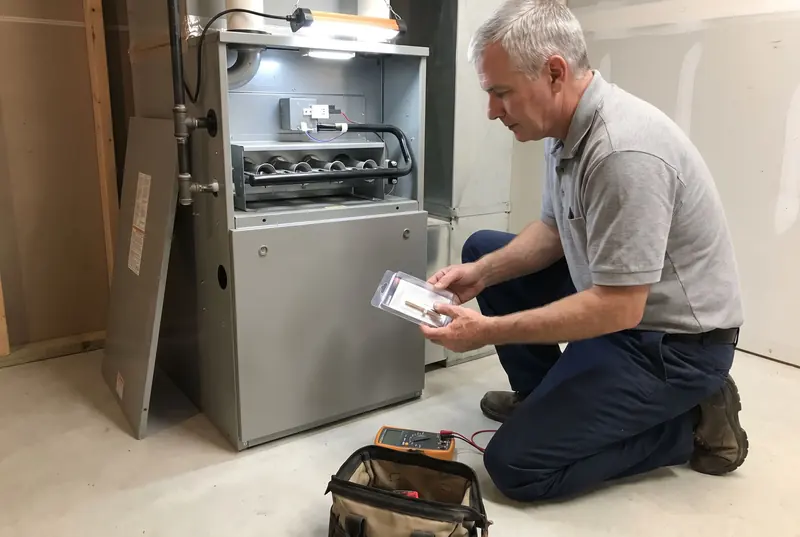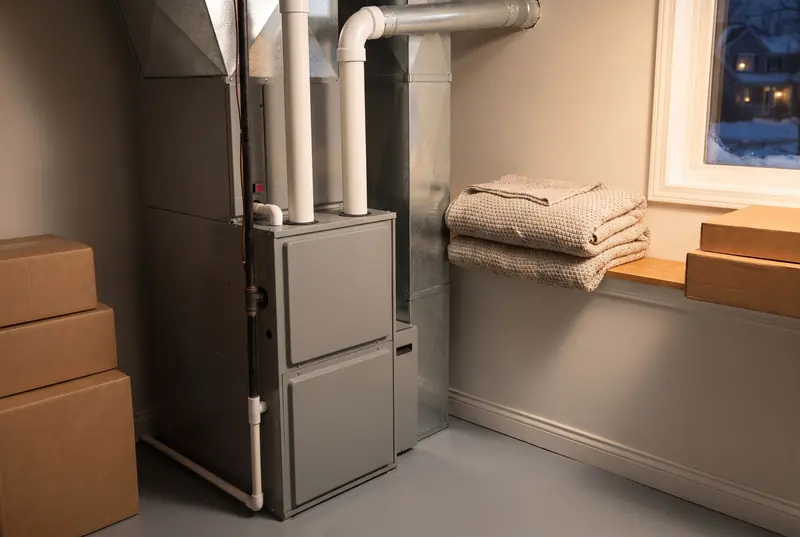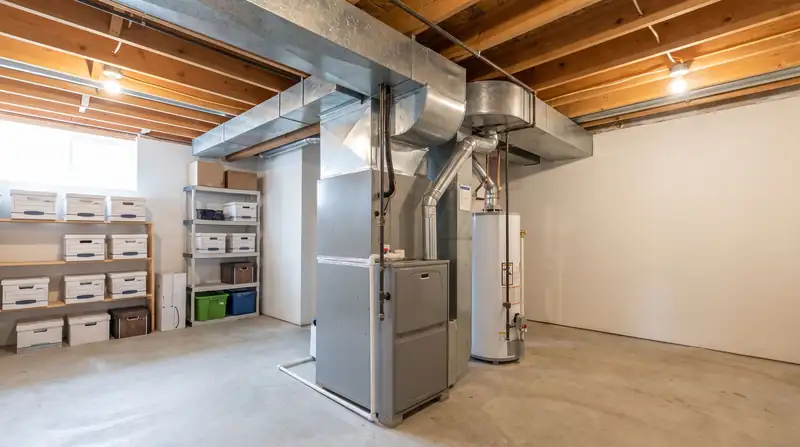

Every time your thermostat calls for heat, the furnace runs a fixed checklist. The inducer motor starts and proves draft by closing a pressure switch, the hot surface igniter heats up, the gas valve opens, the burners light, and the flame sensor confirms there is fire. Only after all of that does the blower begin sending warm air into the house. Finding the step that fails is most of the job. Around Haverhill, MA, the usual failure points are an oxide-coated flame sensor, an igniter cracked by years of heating and cooling, a pressure switch that stays open because of a weak inducer or a clogged condensate trap on a high-efficiency unit, and control boards with burned relays. Each one halts the startup, and from the hallway they all look alike.
Cooling trouble instead? See AC Repair.
Warning Signs for Furnace Repair
Catching these issues early helps you avoid costly problems. Keep an eye out for the following clues:
- Water, rust stains, or black soot around the flue or cabinet
- A pilot or burner flame that is lazy yellow instead of crisp blue
- Squeals, scrapes, or grinding noises behind the blower door
- The furnace clicks and glows but the burners never light
- A furnace that shuts off every few minutes before the house warms up
- A fan that keeps running while the registers blow cool air
- Burners light, run a few seconds, then shut down repeatedly
- A bang or boom when the burners ignite late
Act Before It Gets Worse
Most HVAC failures start small, a weak capacitor, a squealing blower, a system that runs a little longer each week. At the first hint of a problem, call (351) 345-9324 for a fast inspection.